Social Engineering
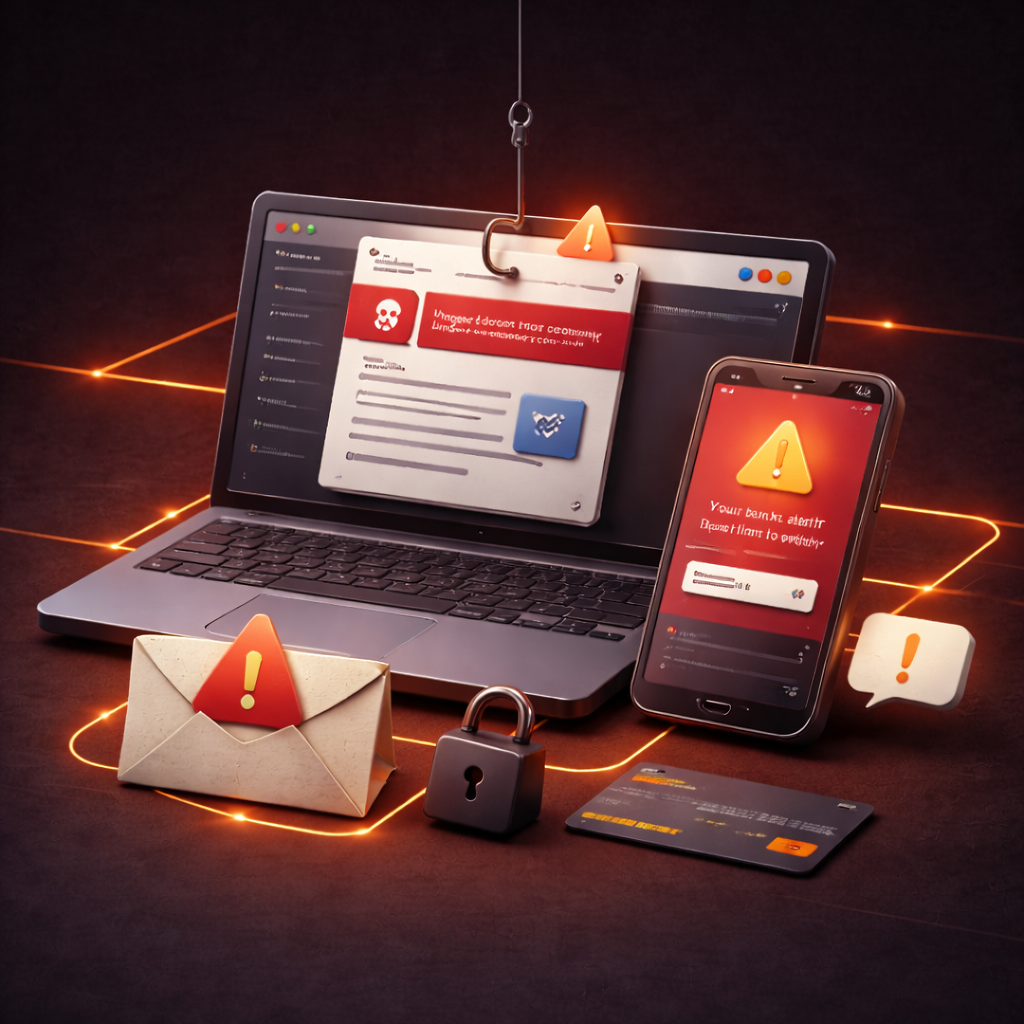
Our social engineering testing simulates real-world attacks that target people rather than systems. We assess how susceptible your organization is to manipulation, deception, and human-focused attack techniques that are commonly used to gain unauthorized access or sensitive information.
Expert-Led Manual Testing
Social engineering attacks exploit trust, urgency, and human behavior. Our assessments are carefully planned, authorized, and executed in a controlled manner to measure real risk without causing disruption or harm.
Key areas:
– Phishing (email-based attacks)
– Vishing (phone-based attacks)
– Smishing (SMS and messaging attacks)
– Pretexting and impersonation
– Credential harvesting scenarios
Methodology
All testing is performed based on the MITRE ATT&CK, the NIST SP 800-115 Technical Guide to Information Security Testing and Assessment and other customized frameworks.
We Follow The 7-Phase Standardized Process to go From Initial Planning to Final Reporting, Ensuring Comprehensive Security Assessments.
1. Pre-Engagement Interactions
Defining the scope, rules, and objectives of the test with the client, including setting expectations, legal boundaries, and necessary tools.
2. Intelligence Gathering
Collecting information about the target organization, both from public sources (OSINT) and provided information, to understand potential attack vectors.
3. Threat Modeling
Identifying critical business assets, processes, and potential attacker groups (threat communities) to prioritize security efforts.
4. Vulnerability Analysis
Finding and validating weaknesses in systems and processes that could be exploited.
5. Exploitation
Actively leveraging identified vulnerabilities to breach the system and gain access, finding the weakest points of entry.
6. Post-Exploitation
Assessing the value of compromised systems, simulating data exfiltration, mapping the internal network, and pivoting to other targets.
7. Reporting
Creating comprehensive technical and executive reports detailing findings, vulnerabilities, risks, and actionable remediation guidance for the client.
 Hackings